Electricity prices across Australia have risen steadily, and feed-in tariffs, which you are paid for exporting exce...
Mar 10, 2026

Mar 18, 2026
Share post on


If you’re planning solar or thinking about adding a solar battery later, understanding your inverter choice is important. The inverter is the “brain” of your system. It controls how solar power is converted and used in your home.
In this solar inverter Australia guide, we’ll explain the difference between grid-tied and hybrid inverters in very simple words so that you can choose with confidence.
It is not about brands or sales claims. It’s about how each type works, where each fits best, and what to consider if batteries are part of your future plan.
Solar panels produce DC (direct current) electricity. Homes run on AC (alternating current). The inverter converts DC into usable AC power for your appliances.
It also:
Choosing the right solar inverter for Australian homeowners depends on whether you want solar-only or solar plus battery capability.
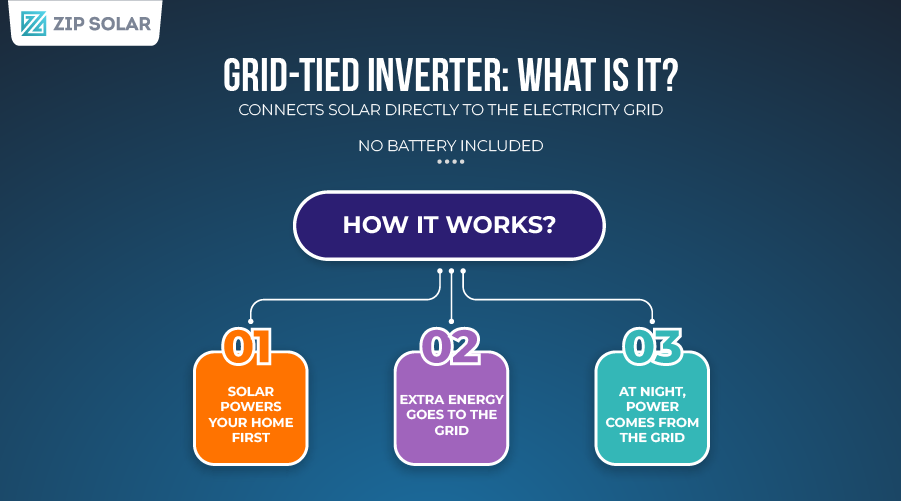
A grid tied inverter Australia homes commonly use is designed for solar systems connected directly to the electricity grid, without a battery.
How it works:
Pros:
Limits:
A grid-tied inverter is usually suitable if you want to start with solar only and keep costs lower today.
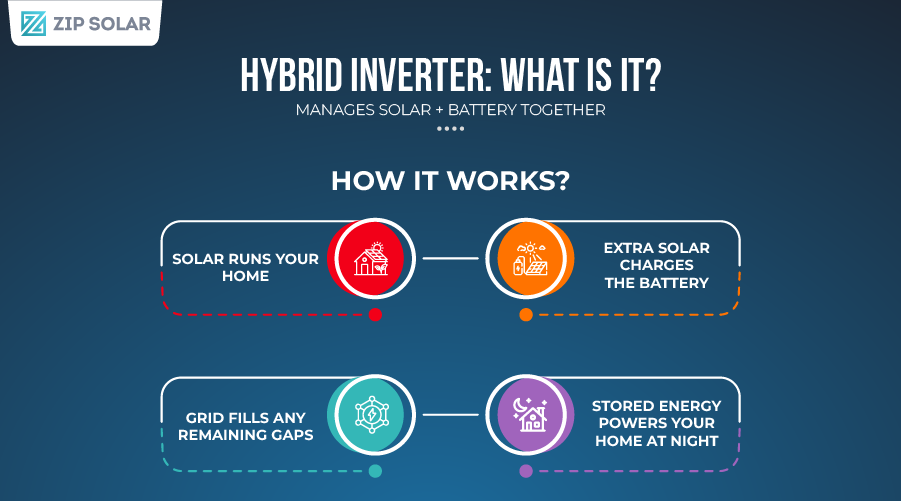
Hybrid inverter systems in Australia are built to manage both solar panels and batteries together. It can send solar power to your home, your battery, or the grid, depending on what’s needed at that moment.
How it works:
Pros:
Limits:
When comparing grid-tied vs. hybrid inverters, the key differences are battery readiness and flexibility.
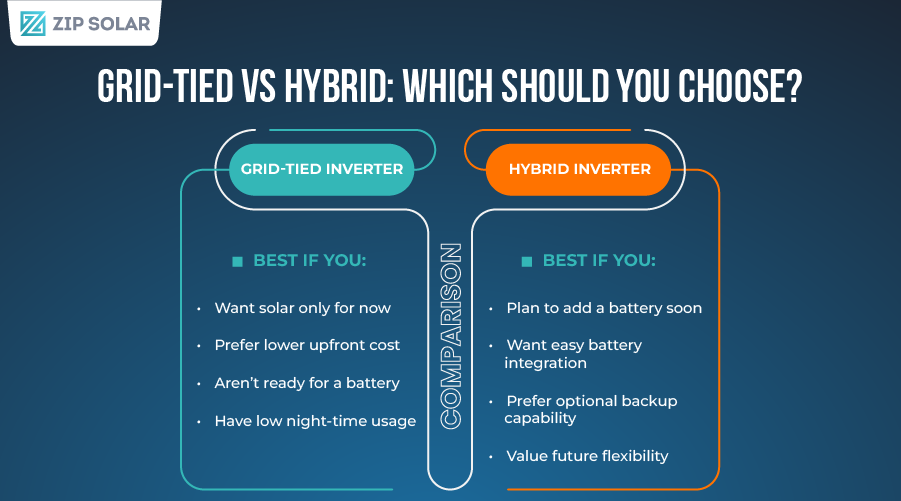
Think about your future plans, not just today’s budget.
Choose grid-tied if:
Choose hybrid if:
In this solar inverter guide, the most practical advice is: if batteries are likely to last for a few years, a hybrid system often simplifies later upgrades.
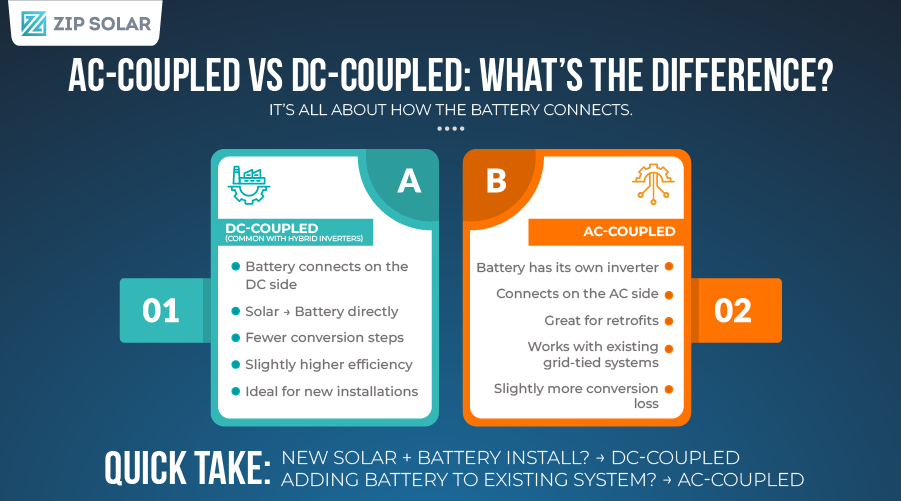
You’ll often hear about AC coupled vs DC coupled inverter battery setups. It simply describes how the battery connects.
AC-coupled setups are often used when adding batteries to older systems.
Not every inverter works with every battery. Even within hybrid models, compatibility lists apply.
Always check:
A good installer checks compatibility before recommending equipment. This prevents performance and warranty issues later.

Inverter choice affects how easily you can expand your system later. It’s not just a technical detail. It shapes your upgrade path, solar battery options, and backup capability.
If you’re unsure which inverter type suits your home, Zip Solar can review your usage, roof layout, and future battery plans and explain your options in simple terms. No pressure, just practical guidance so you can choose what fits best.
Yes, often through an AC-coupled battery system, but extra hardware may be needed.
Usually yes, or a compatible battery inverter plus backup wiring.
No. Each inverter has an approved battery list.
DC-coupled connections on the solar side (more efficient). AC-coupled connects on the home side (better for retrofits).
Correctly configured systems avoid this. Poor setup can cause limits.
Only models on approved product lists and meeting standards should be used.
Sometimes, depending on rules, settings, and approvals.
No. Compliance and safety rules require qualified installers.
Yes, but the battery and inverter must support three-phase systems.

Electricity prices across Australia have risen steadily, and feed-in tariffs, which you are paid for exporting exce...
Mar 10, 2026

Living costs in Queensland have continued to rise, and electricity bills are one of the biggest concerns for many h...
Feb 02, 2026
Electricity prices across Australia have continued to rise in 2025-26, and many households are feeling the pressure...
Jan 14, 2026
Rebate Reduction Starts
1st May 2026 – Don’t Miss Out