Are you thinking about installing solar panels or a home battery but worried about the upfront cost?
Jul 08, 2026
Oct 16, 2026
Share post on


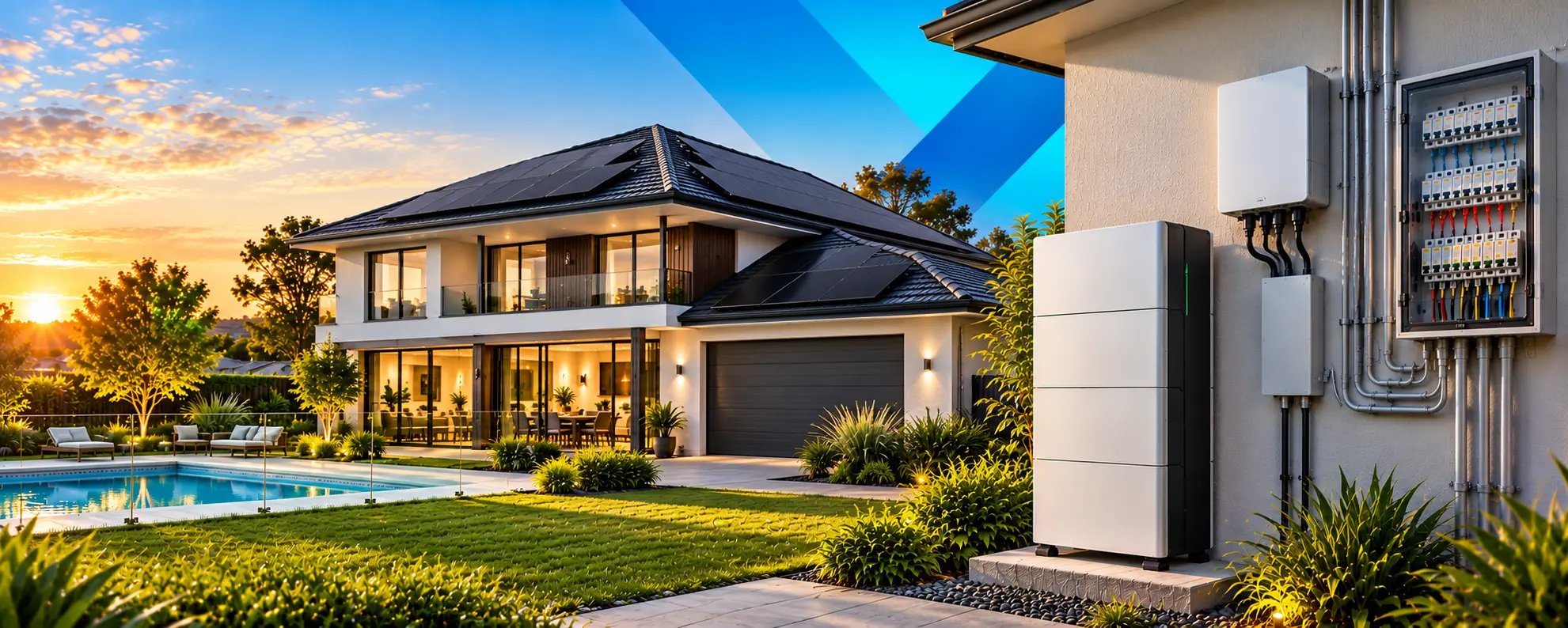
Do you have a three-phase power supply at home?
Are you considering adding a solar battery?
If both answers are yes, choosing a battery needs a little more thought than it would for a typical single-phase home.
Three-phase properties often have larger electrical loads, such as ducted air-conditioning, pool pumps or EV chargers, and the way a battery works with your inverter and switchboard can affect what you actually get from the system.
The good news is that installing a three-phase home battery is absolutely possible. You just need to understand what to check before choosing the system.
So, before you buy, let’s look at the key things that matter for a three-phase home.
Yes, you can install a battery in a three-phase home, but choosing the right three-phase home battery requires a few extra checks compared with a typical single-phase property.
Three-phase supply is common in larger homes and properties running higher-demand equipment such as pool pumps, EV chargers and ducted air-conditioning. The key is making sure the battery, inverter and electrical setup work together.
You also need to understand what the system can actually power during an outage before deciding on battery capacity or backup requirements.
A three-phase home battery stores electricity from your solar system or the grid for later use in a home with three-phase power.
The important difference is that electricity is distributed across three phases, so the inverter and battery configuration determine how stored energy is supplied around the home.
A three-phase supply uses three active conductors, allowing electrical loads to be distributed across the phases. This configuration can support homes with higher electricity demands, such as those running ducted air-conditioning, pool pumps and EV chargers.
A three-phase inverter is designed to work with a three-phase electrical supply. However, the suitable inverter and battery configuration depends on the existing solar system, battery architecture, and network requirements.
Before choosing a system, have a qualified installer assess compatibility and confirm that the proposed configuration meets the property's electrical and connection requirements.
If you're adding a battery to existing solar, understanding the difference between a grid-tied vs hybrid inverter can help when assessing compatibility.
A battery can be AC-coupled or DC-coupled. With a hybrid inverter, compatible solar panels and battery storage can be managed through the same inverter. If you're adding storage to existing solar, the existing inverter should therefore be checked before choosing a battery.
A three-phase battery backup system does not automatically provide whole-home backup across all three phases. Backup capability and phase support vary by battery and inverter model, and some systems may not support backup across all three phases.
Depending on the equipment and switchboard configuration, backup may cover selected essential circuits or only certain phases. Always check the manufacturer's specifications to confirm which circuits and phases will remain powered during an outage.
Battery capacity is only part of the equation. You also need to check continuous power output and surge output. Equipment such as pool pumps and ducted air-conditioning can require high start-up power, while an EV charger can create a substantial ongoing load.
For this reason, homeowners considering three phase battery backup should ask their installer two specific questions:
If whole-home backup is important, make that clear during system design. Don't assume that having enough stored energy automatically means every appliance across every phase can operate during a blackout.
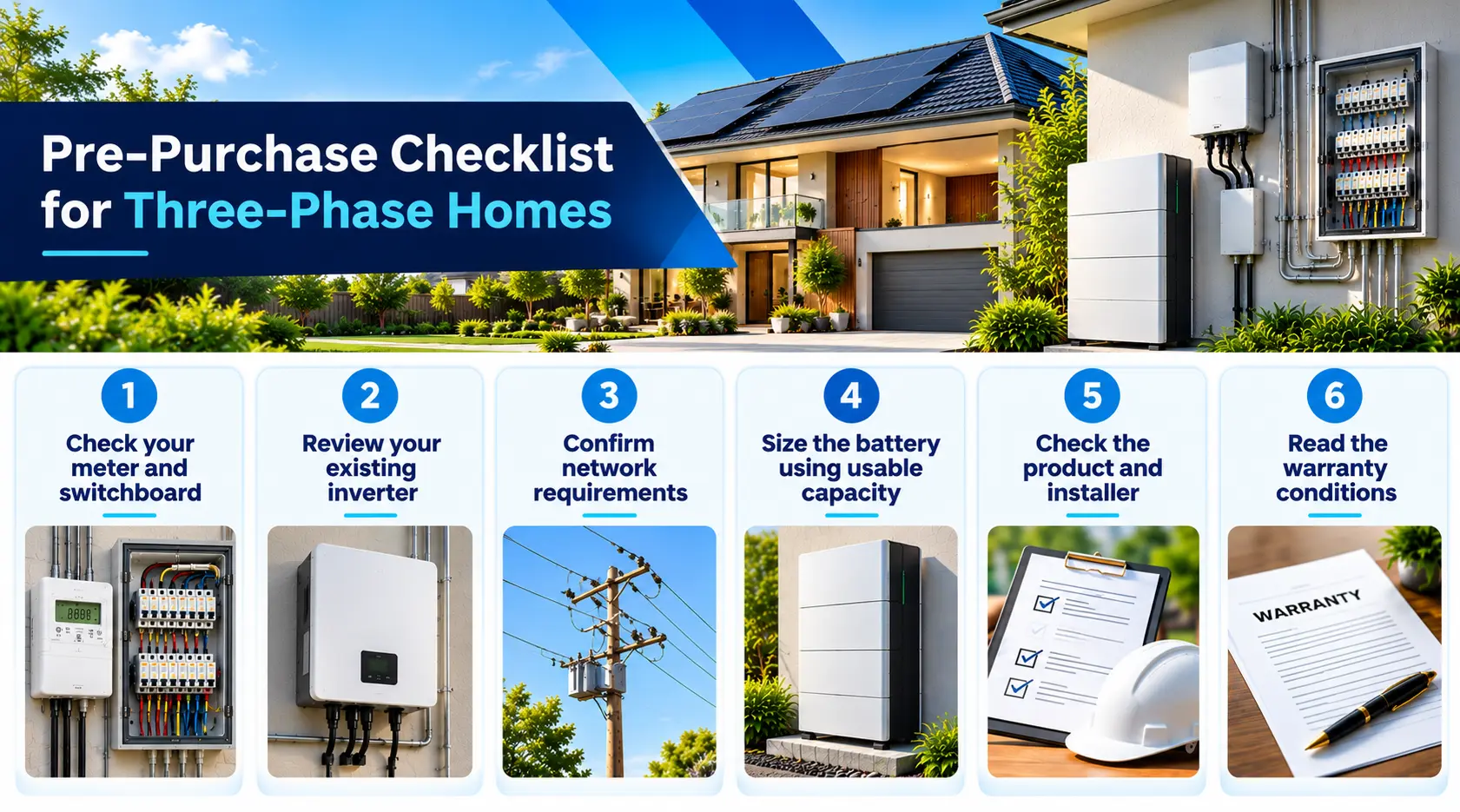
Before buying a battery, check how the proposed system will work with your home's existing electrical setup.
If you already have solar, check the inverter's type, size, age and battery compatibility. This helps determine whether existing equipment can be retained or the system design needs to change.
Connection conditions and per-phase export limits can vary between Distribution Network Service Providers (DNSPs). Confirm the requirements for your property directly with your network rather than applying limits from another location.
Use the battery's usable capacity (kWh) rather than nominal capacity, and compare it with your evening and overnight consumption across the phases. Use Zip Solar's solar battery sizing guide to assess how much storage your household may actually need.
Confirm that the proposed battery and inverter meet applicable approval requirements by checking the Clean Energy Council's approved product lists. You should also verify your installer's accreditation through Solar Accreditation Australia and ensure the installation complies with applicable battery safety requirements, including AS/NZS 5139 where applicable.
Look beyond the headline warranty period. Check any cycle or energy-throughput conditions, capacity-retention terms and, importantly, who will handle servicing or
A suitable single-phase vs three-phase battery setup depends on more than storage capacity. Avoid these common mistakes before committing to a system:
If you're still weighing the broader value of storage, is a solar battery worth it? before making the investment decision.
There isn't one battery configuration that suits every three-phase property. The right system should account for your electricity usage, existing solar, inverter, switchboard and backup requirements.
Yes. Batteries can be installed in homes with three-phase power. The right configuration depends on your existing solar and inverter setup, switchboard, network requirements and what you want the battery to power during normal operation and an outage.
Not necessarily. Three phase battery backup varies according to the battery, inverter and system design. Some configurations may supply selected essential circuits or particular phases. Confirm the exact backup configuration and output limits before choosing a system.
Not in every situation. Whether you need a three phase inverter depends on your existing equipment, proposed battery, system configuration and network requirements. An installer should assess compatibility before recommending the appropriate setup.

Are you thinking about installing solar panels or a home battery but worried about the upfront cost?
Jul 08, 2026
Do you feel like you’ve missed the solar battery incentive
Jun 14, 2026
Are your electricity bills still high even after installing solar panels?
Apr 14, 2026
Federal Battery Rebate Reduces From
1 Jan 2027 – Don’t Miss Out