Are you a Western Australian homeowner planning to install a solar battery?
Oct 20, 2026
Oct 23, 2026
Share post on


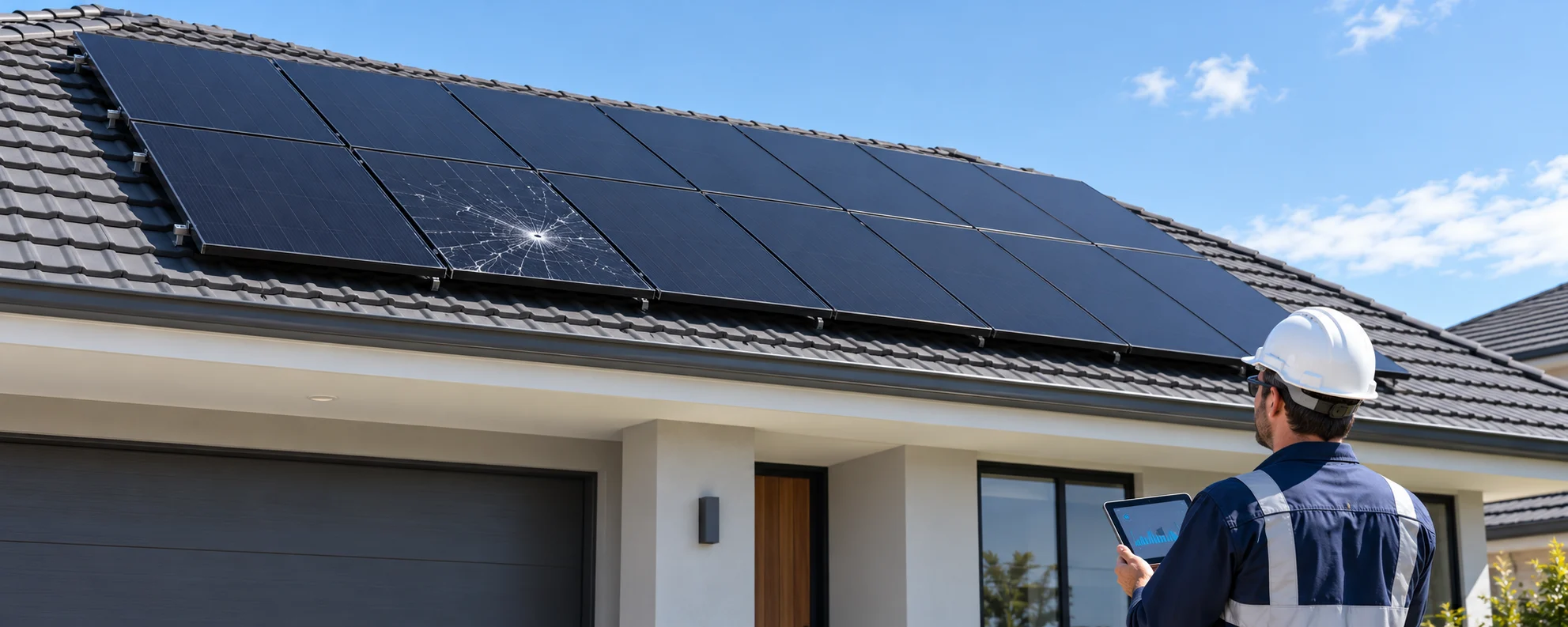
Have you noticed cracks, discolouration or other visible damage on your solar panels?
Or has your solar system started generating less electricity than before?
If you've answered yes to either question, it's important to identify the cause before deciding what to do next.
A cracked solar panel can raise safety and performance concerns, but reduced electricity generation doesn't always mean the panels are damaged.
In most cases, physically damaged panel glass calls for professional assessment and likely replacement rather than a simple repair. However, other performance problems may have less complicated solutions.
So, let’s explore the warning signs, immediate safety precautions and how to decide whether repair or replacement is the right option.
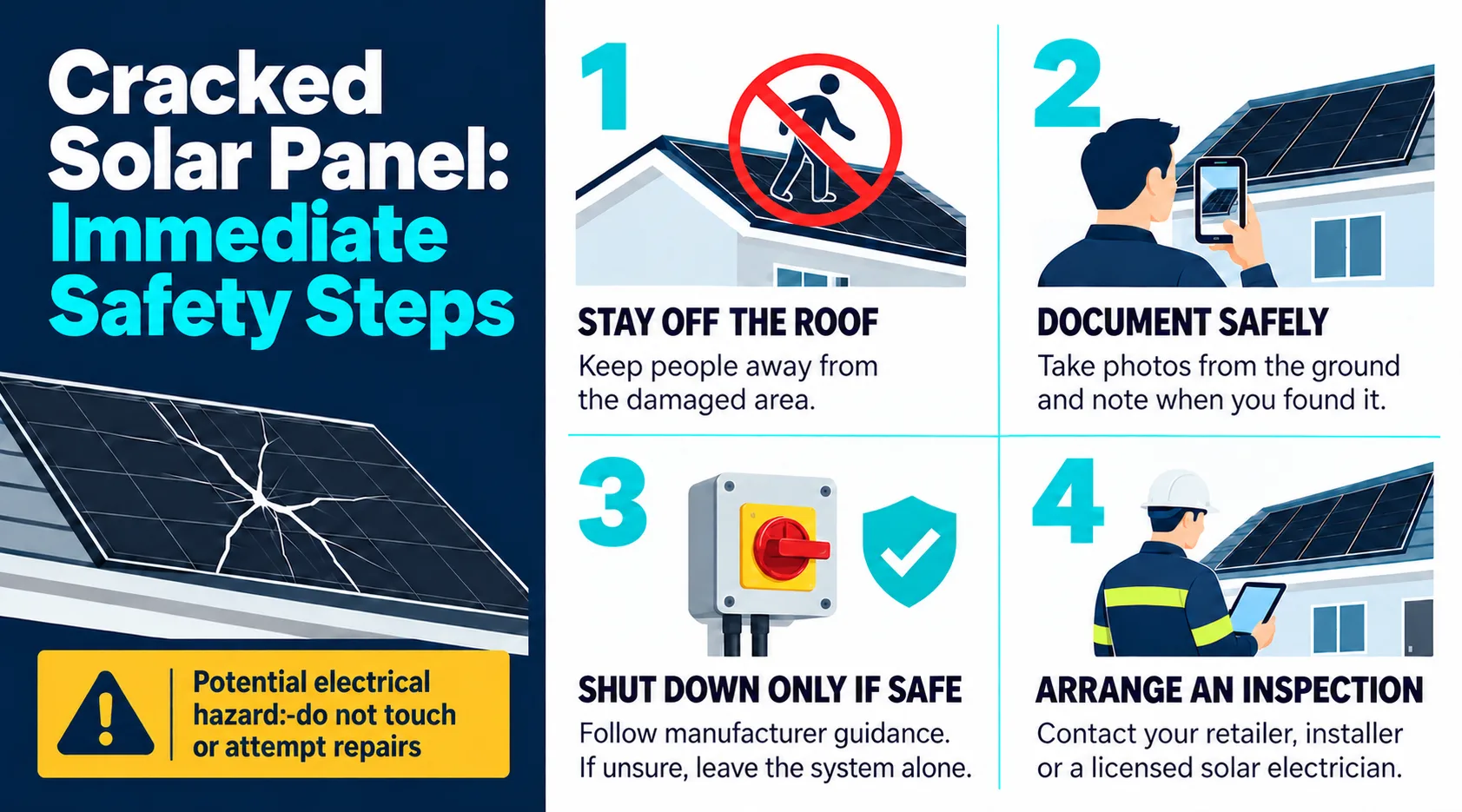
A cracked solar panel should be treated as a potential electrical safety issue. Damage to the protective glass may allow moisture to enter the panel and increase the risk of electrical faults. Do not touch the panel, climb onto the roof or attempt a temporary repair, even if the system appears to be operating normally.
If you notice panel damage, take these precautions:
Be cautious of anyone recommending sealants or quick repairs without first inspecting the system. Our guide to avoiding solar scams explains what to check when choosing a solar service provider.
A professional inspection can determine the extent of the damage, whether the system can continue operating safely and whether the affected panel needs to be replaced.
Not every drop in solar generation means your panels are physically damaged. Some problems are visible from the ground, while others require professional testing to identify.
A solar panel may show visible or suspected signs of damage, including:
These warning signs do not always mean that a panel must be replaced. A professional inspection is needed to determine the cause, severity, safety implications and effect on system performance.
Underperforming solar panels aren't necessarily damaged. Common causes include shading, dirt accumulation, inverter faults and normal degradation, which is the gradual reduction in a panel's electricity-generating ability as it ages.
Start by reviewing your solar monitoring app to compare current generation with previous performance under similar weather conditions. A sudden or unexplained decline may warrant further investigation.
For additional guidance, explore our solar PV troubleshooting guide and learn how roof shading affects solar panel performance.
You can also discover ways to optimise solar system performance before considering replacement.
Remember: Visible damage and reduced output require different responses. A professional inspection can help distinguish between electrical faults, maintenance issues and panels that genuinely need replacing.
Whether you should repair or replace solar panel equipment depends on the type of damage, its severity and the condition of the existing system.
Some performance problems, such as loose connections, inverter faults or wiring issues, may be resolved through professional servicing without replacing the panels themselves.
However, solar panel repair is generally not a reliable long-term solution for fractured glass. Applying sealants to a damaged solar panel should not be assumed to restore its original electrical safety or weather resistance.
Replacement is usually the more appropriate option when physical damage compromises a panel's safety or integrity.
However, replacing a single panel in an older system requires compatibility checks. Differences in electrical specifications between the replacement and existing panels can affect string performance.
For older installations, consider upgrading your solar system rather than replacing individual components.
| Situation | Likely action | Who to call |
|---|---|---|
| Cracked or shattered glass | Assess for replacement | Accredited solar installer |
| Inverter or wiring fault | Diagnose and repair if appropriate | Qualified solar electrician |
| Dirt or shading | Address the underlying cause | Solar maintenance professional |
| Internal cell damage or micro-cracks | Test and assess replacement | Accredited solar installer |
| Ageing panels with declining output | Assess performance and upgrade options | Solar system specialist |
Replacing one, some or all panels in an existing solar system generally does not qualify for additional Small-scale Technology Certificates (STCs) when existing components, such as the inverter, remain in use and STCs were previously claimed for the system.
However, replacing the entire solar system may qualify for STCs if the original system is completely removed and the new installation meets all current eligibility requirements.
This includes using new approved panels and an approved inverter, meeting applicable standards and having the system installed by appropriately accredited professionals.
System expansions or separately installed additional systems may also be eligible under specific conditions. Eligibility depends on how the work is classified and whether all current scheme requirements are satisfied.
Check the Clean Energy Regulator’s guidance before assuming that replacement or upgrade work will qualify.
Unsure whether repair, panel replacement or a complete system upgrade is appropriate? Contact Zip Solar to arrange a system health assessment before making changes to your installation.
Before paying for a replacement, check whether your panel warranty or home insurance could cover the damage. The outcome depends on the cause and the terms of your coverage.
Solar installations generally involve three types of warranty:
Review your panel warranty documents and contact the original installer or manufacturer before arranging replacement.
You may also have rights under the Australian Competition and Consumer Commission's (ACCC) consumer guarantees, which operate separately from voluntary warranties.

Some home insurance policies may cover solar panels damaged by events such as storms or hail, but coverage is not automatic.
Before submitting a home insurance claim, check your policy's inclusions, exclusions and excess. Keep photographs, installation records and a professional damage assessment to support your claim.
Important: Confirm your warranty and insurance position before authorising non-urgent replacement work.
Minor electrical or connection faults may be repairable, but cracked panel glass generally requires replacement. A qualified professional should assess the damage and determine whether the panel can operate safely or needs replacing.
A cracked panel can present electrical and moisture-related risks, even if it continues generating electricity. Avoid touching it or climbing onto the roof, and arrange a professional inspection as soon as possible.
Some home insurance policies cover solar panel damage caused by storms, hail or other insured events. Check your policy's terms, exclusions and excess, and obtain a professional inspection report before submitting a claim.
Are you a Western Australian homeowner planning to install a solar battery?
Oct 20, 2026
If both answers are yes, choosing a battery needs a little more thought than it would for a typical single-phase ho...
Oct 16, 2026

Are you thinking about installing solar panels or a home battery but worried about the upfront cost?
Jul 08, 2026
Federal Battery Rebate Reduces From
1 Jan 2027 – Don’t Miss Out