Have you noticed cracks, discolouration or other visible damage on your solar panels?
Oct 23, 2026

Oct 23, 2026
Share post on


Do you already have solar panels installed on your roof?
Are you thinking about adding a battery to store excess solar energy? Yes.
If you've answered yes to both questions, you might be wondering whether you can add a battery without replacing your existing solar system.
The good news is that you usually can, but the right setup depends largely on your existing inverter.
Understanding the difference between an AC vs DC coupled battery is an important starting point.
So, let's explore how both configurations work and what you should check before upgrading your solar system.
An AC vs DC coupled battery comparison comes down to how your solar panels, inverter and battery connect. AC coupling uses a separate inverter to manage battery storage, while DC coupling connects the panels and battery through a compatible hybrid inverter. Both configurations can store excess solar energy for later use.
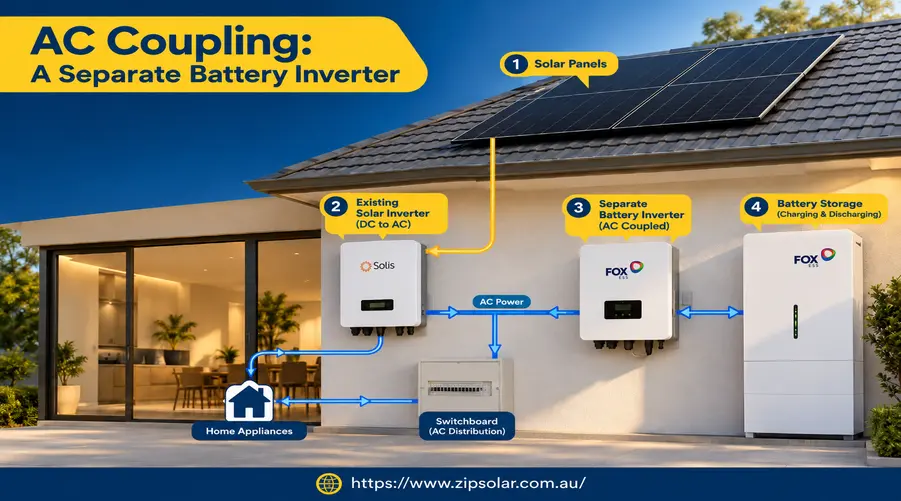
An AC coupled battery connects to the AC side of your existing solar system. Your current solar inverter converts electricity from the panels into AC power, while a separate battery inverter manages charging and discharging.
This arrangement lets you keep your existing solar inverter, provided the new equipment is compatible.
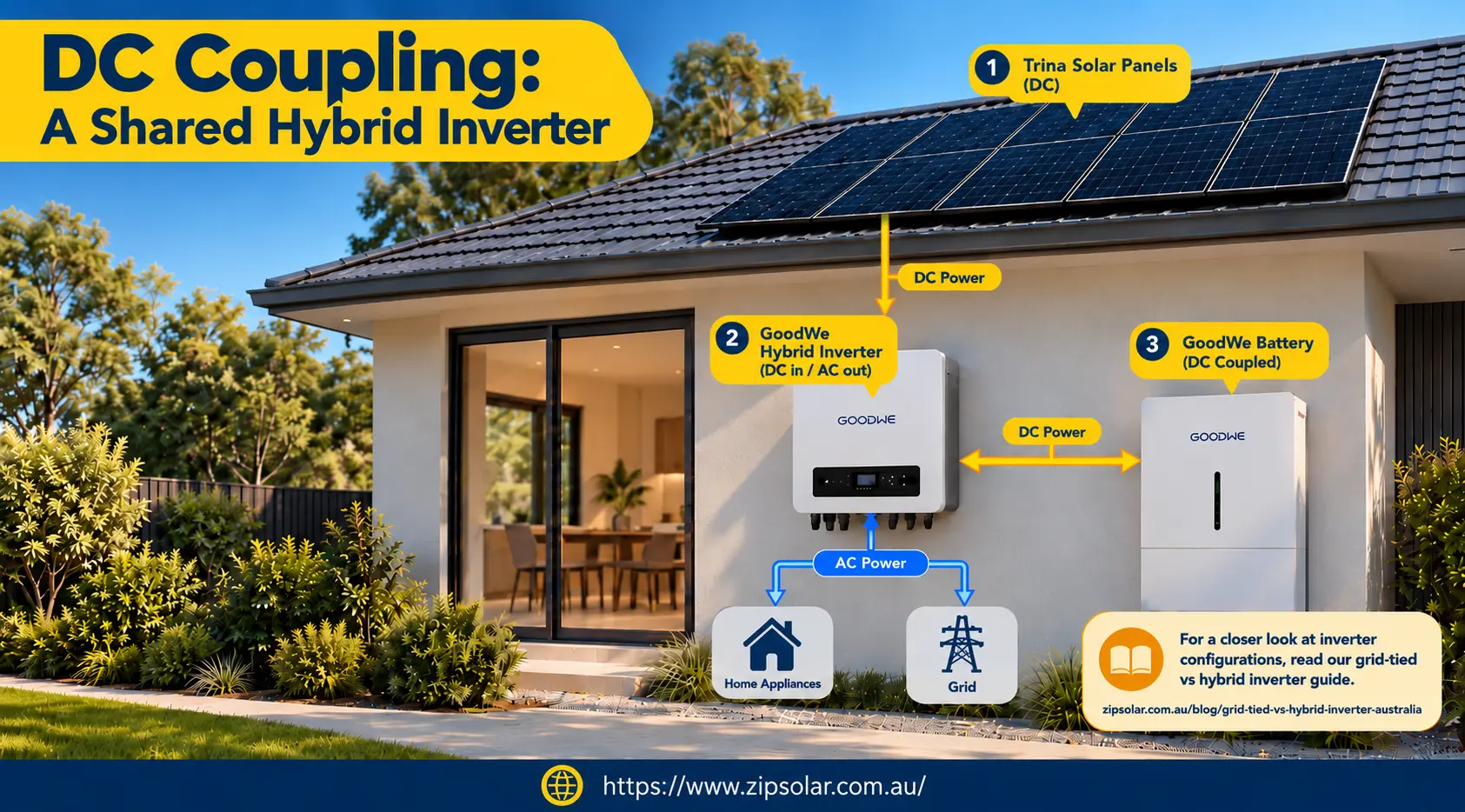
A DC coupled battery connects on the DC side of the system, typically sharing a hybrid inverter with your solar panels.
The hybrid inverter manages energy from both the panels and battery, reducing the need for separate conversion equipment. However, adding DC-coupled storage to an existing system may require replacing the current inverter.
For a closer look at inverter configurations, read our grid-tied vs hybrid inverter guide.
The right choice depends on your current inverter's condition, compatibility and how much of your solar setup you want to retain.
An AC coupled battery is typically a simpler option when your existing solar inverter is working well and still has useful life remaining.
Because the battery operates through a separate battery inverter, you can often add storage without changing the solar panel connections. This makes AC coupling worth considering when you want to add a battery to your existing solar system with minimal changes to the current setup
A DC coupled battery may be more practical if your current inverter is ageing, approaching the end of its warranty or already due for replacement.
In this arrangement, a compatible hybrid inverter manages both solar generation and battery storage. If you're already considering upgrading your solar system, it makes sense to assess both upgrades together.
DC coupling typically involves fewer energy conversion steps, which can improve round-trip efficiency in certain setups. This refers to how much energy you can retrieve from a battery compared with how much you put in to charge it. However, DC coupling is not always more efficient than AC coupling, as actual efficiency depends on the equipment used, system design, and energy conversion pathway during charging and discharging.
DC-coupled systems may also capture some energy otherwise lost through inverter clipping, where solar panels produce more power than the inverter can convert at that moment. However, this depends on the equipment and system design.
AC coupling generally offers more flexibility for retrofits, especially when you want to keep existing equipment.
If you're also exploring getting more from old solar panels, consider their performance alongside your inverter's condition before deciding.
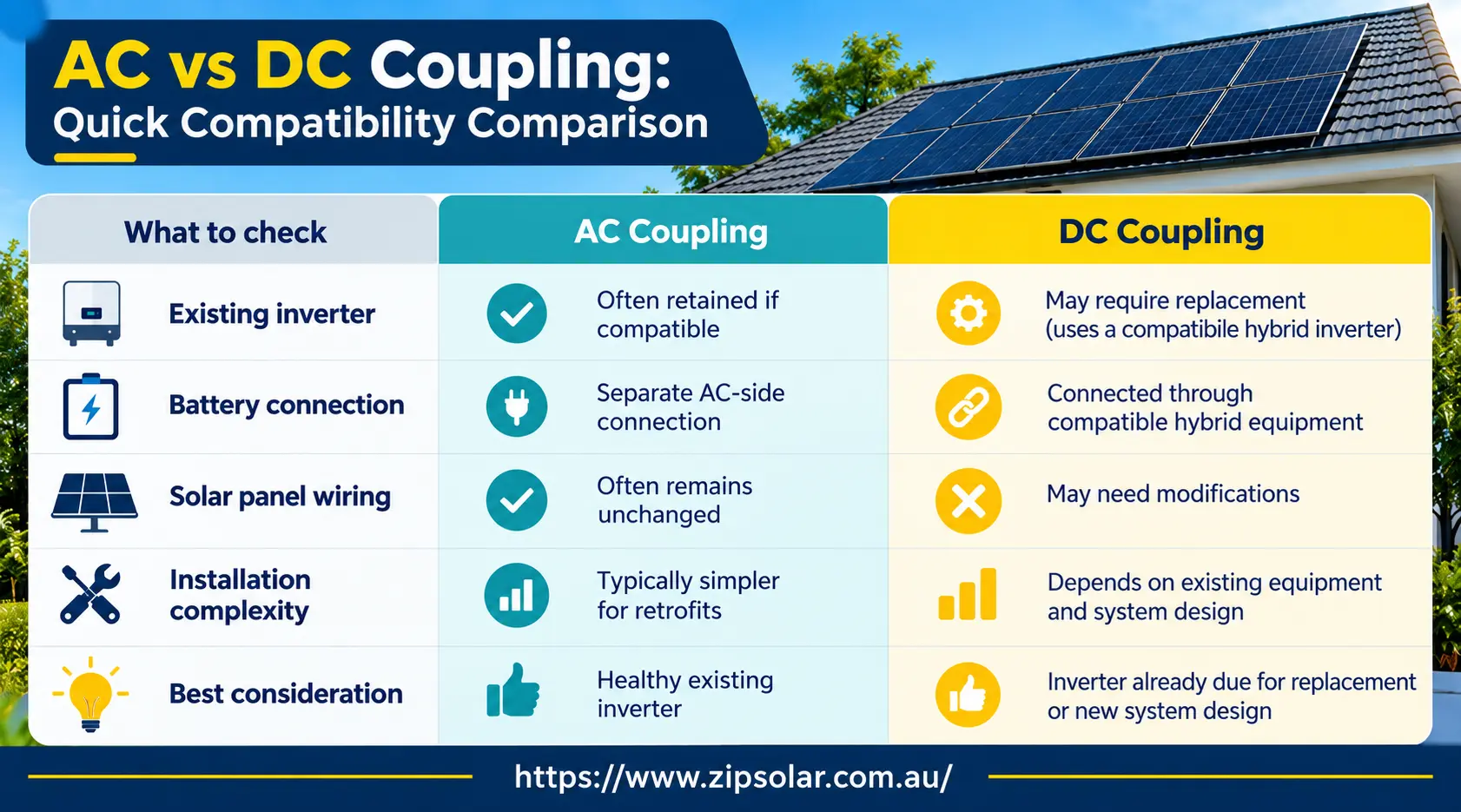
Before adding a battery to your existing solar system, it’s important to confirm that your current equipment can support the proposed setup. Retrofitting a solar battery isn't always straightforward, especially when the original system is several years old. While AC coupling may allow you to keep your existing solar inverter, this is not guaranteed. Retaining the inverter depends on system compatibility, equipment condition, network requirements and any necessary approvals.
Use this checklist to identify what needs checking before installation.
The right choice also depends on your household's storage needs. Review our key factors when choosing a battery and solar battery sizing guide before finalising the system.
Adding a battery to your existing solar system may qualify for support under the Australian Government's Cheaper Home Batteries Program, provided the battery, installation and other eligibility requirements are met.
As at 14 October 2026, homeowners should check the latest eligibility conditions directly with the Department of Climate Change, Energy, the Environment and Water (DCCEEW). You can also explore Zip Solar's federal battery rebate savings and Cheaper Home Batteries Program update for further guidance.
A battery retrofit doesn't necessarily void your existing solar panel warranty. However, changes to the inverter, wiring or other components may affect specific warranty conditions.
Before proceeding, ask your original solar installer and the battery manufacturer to confirm warranty implications in writing, particularly if an inverter replacement is involved.
This helps clarify who is responsible for future servicing or warranty claims.

You don't necessarily need to replace your entire solar system to enjoy the benefits of battery storage. First, understand which configuration works with your existing equipment.
Contact Zip Solar for a free solar battery upgrade assessment, or explore our solar battery packages and 14kWh solar battery packages to see the available options.
Yes. Most existing solar systems can be assessed for battery storage without replacing the panels. Whether you need additional equipment depends on your current inverter, electrical setup and the battery's compatibility with your system.
Neither is universally better. AC coupling typically offers more flexibility when you want to keep an existing inverter, while DC coupling can reduce conversion steps. The better option depends on your equipment's condition, installation requirements and intended battery use.
Not always. An AC-coupled setup can often retain your current solar inverter, while DC coupling may require a compatible hybrid model. Your installer should confirm compatibility and whether replacement is necessary before recommending either configuration.
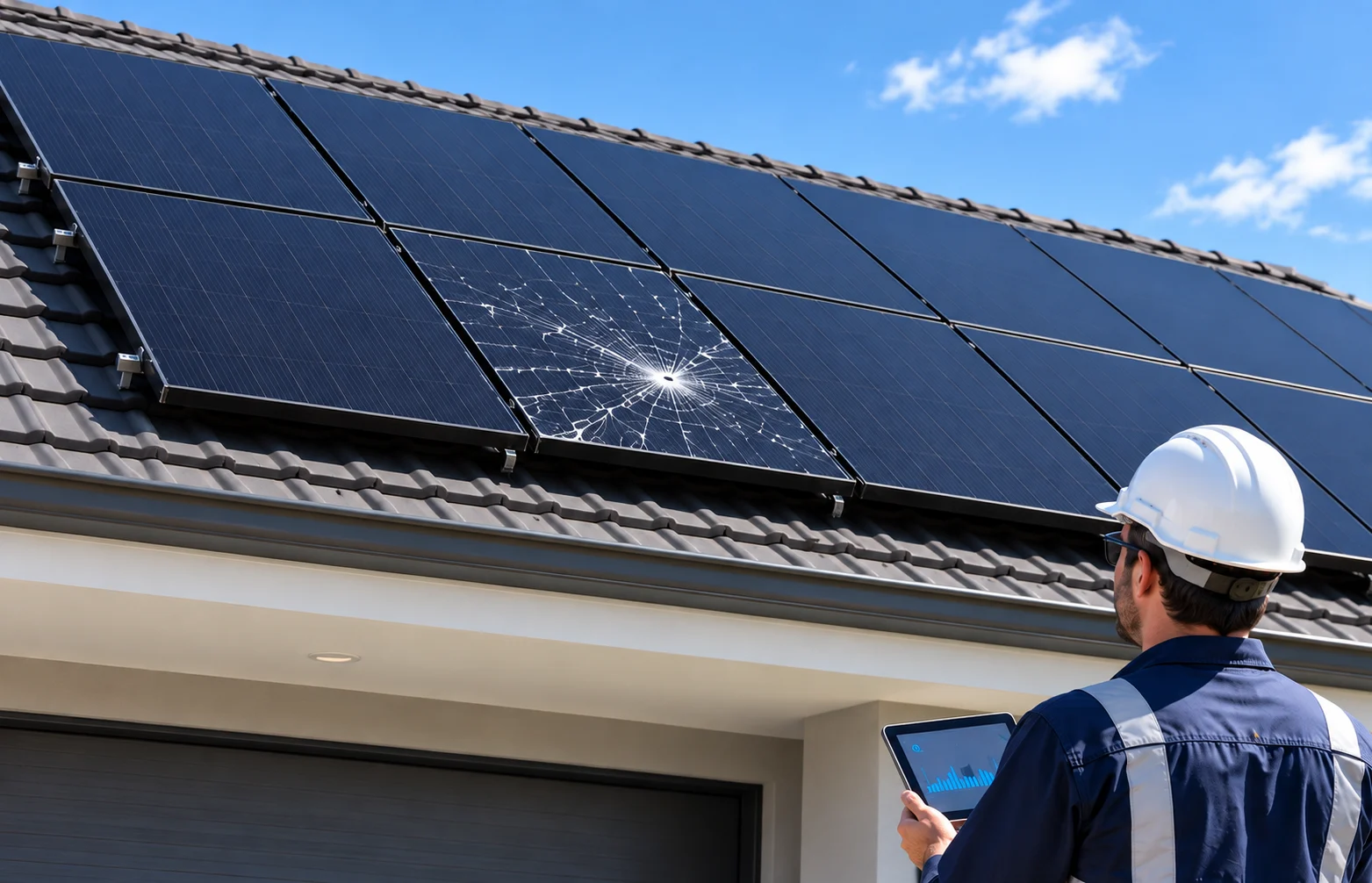
Have you noticed cracks, discolouration or other visible damage on your solar panels?
Oct 23, 2026

Are you a Western Australian homeowner planning to install a solar battery?
Oct 20, 2026

If both answers are yes, choosing a battery needs a little more thought than it would for a typical single-phase ho...
Oct 16, 2026

Federal Battery Rebate Reduces From
1 Jan 2027 – Don’t Miss Out